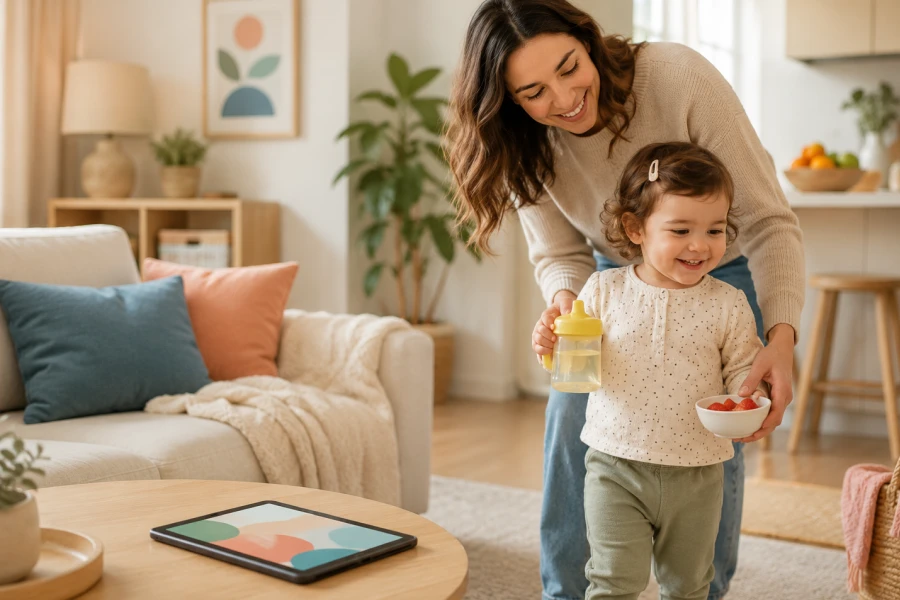
Positive screen alternatives matter because toddlers need something appealing after the screen ends. Removing media without offering a next step can create frustration. Young children are still learning how to shift attention. They need concrete invitations. A basket of blocks, a water station, a dance song, or a snack routine can help. The goal is not to entertain children every second. The goal is to make real-world play easier to enter. With parent-led screen routines, endings become smoother.
Preparation makes a major difference. Toddlers cannot always invent a new activity while upset. Parents can prepare the next option before viewing begins. This might be a puzzle on the table or shoes by the door. It might be bubbles, crayons, or a snack plate. The activity should feel easy to start. Too many choices can overwhelm a toddler. One or two options work better. Prepared alternatives reduce the empty space between screen and play. That space often causes the meltdown.
Movement helps toddlers reset after sitting still. A short dance break, animal walk, hallway obstacle path, or outdoor run can shift energy quickly. Physical play also supports coordination and regulation. Parents can make movement playful rather than instructional. Pretend to stomp like dinosaurs. Hop to the kitchen. Carry stuffed animals across the room. These activities feel silly, but they work. They move the body and change the mood. toddler attention support often starts with the body.
Not every replacement needs to be active. Some toddlers need a calm landing after media. A cozy book corner, soft toys, simple puzzles, or quiet music can help. The key is matching the child’s energy. A tired toddler may resist active play. A restless toddler may need movement first. Parents can observe what works at different times. Quiet alternatives also help before naps and bedtime. They make the day feel less overstimulating. The best option is the one the child can actually enter.
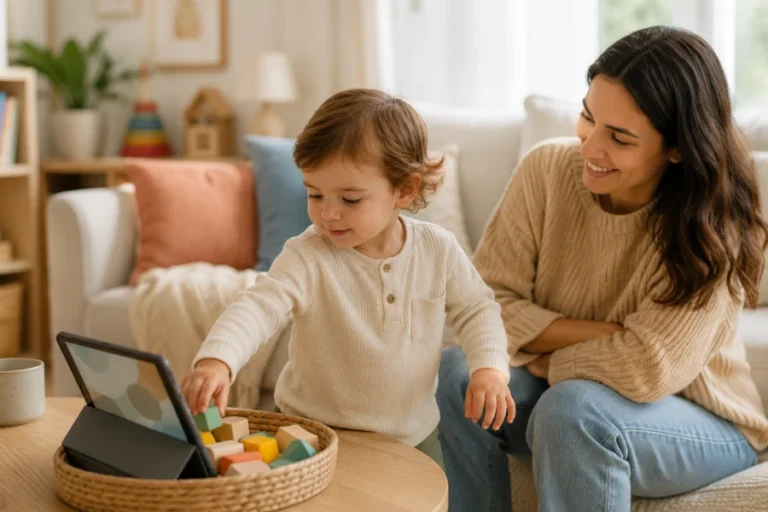
Parents need alternatives that do not require constant performance. Simple setups work best. Keep a small rotation of activities ready. Use bins, trays, or baskets so setup stays quick. Choose toys that encourage open-ended play. Blocks, pretend food, vehicles, scarves, and nesting cups can stretch attention. Parents can start the activity and then step back. This protects the adult’s energy. With toddler screen time rules, alternatives become part of the plan instead of an afterthought.
Transitions are easier when the next action is specific. After the screen ends, toddlers need a clear path. First snack. Then blocks. First shoes. Then walk. This simple sequence reduces uncertainty. Parents can repeat the same language each time. Familiar phrasing helps toddlers feel secure. It also reduces negotiation. The alternative does not need to be exciting every time. It needs to be understandable. When children know what comes next, they often resist less. Predictability lowers emotional intensity.
The long-term goal is not banning every screen. It is creating a home where screens are not the most interesting option all day. Toddlers need textures, sounds, people, movement, and imagination. They need chances to help, explore, build, spill, stack, and pretend. Parents can make those experiences visible and reachable. Over time, children rediscover slower forms of attention. They also become better at moving from media back to life. That shift makes the whole household feel calmer and more flexible.



Leave a comment