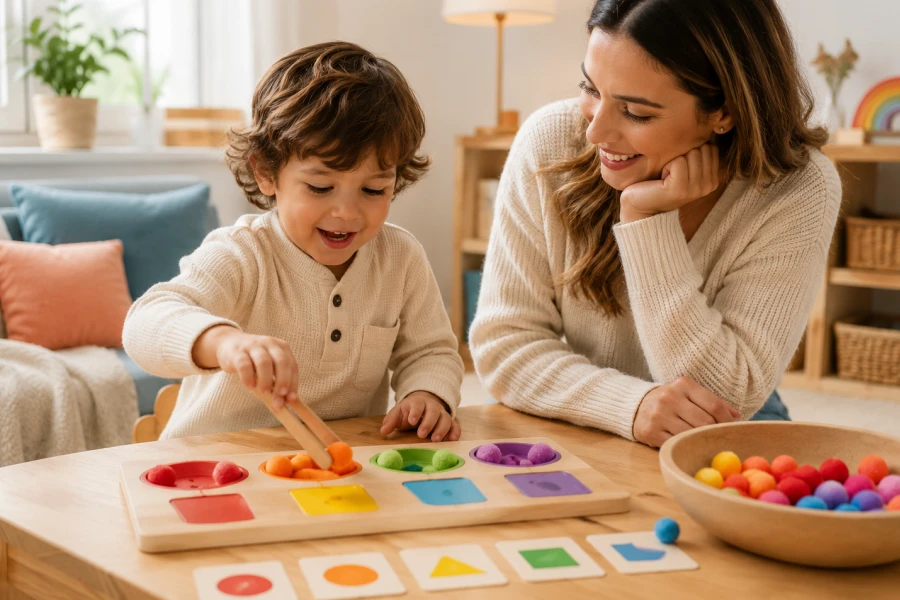
Fun learning strategies can turn study time from resistance into curiosity. Children often learn better when they feel invited, not forced. Play gives the brain emotion, movement, and connection. Those ingredients make information easier to remember. Parents do not need complicated materials. They need simple ways to make practice interactive. A kitchen table can become a sorting station. A walk can become a memory hunt. A bedtime story can become a recall game. With playful study habits, learning becomes more natural.
Resistance often rises when children expect boredom or failure. Play lowers that wall. It gives children a reason to participate before they feel fully confident. This matters because practice requires repetition. If repetition feels miserable, children avoid it. If it feels playful, they return more easily. Parents can add choice, surprise, movement, or humor. These small changes make a big difference. Children begin to associate learning with discovery. That emotional shift supports stronger attention and better memory.
Children process information in different ways. Some need to talk. Others need to draw, move, build, or act. Parents can rotate formats to discover what works. A visual learner may enjoy color sorting. A verbal learner may prefer explaining ideas aloud. A movement-seeking child may remember better through action games. This flexibility prevents one method from becoming the only method. It also helps children feel seen. kid-friendly brain training works best when it respects the child.
Children avoid learning when mistakes feel embarrassing. Parents can change the emotional meaning of errors. Treat mistakes as clues. Ask what the mistake tells you. Celebrate the moment a child notices what changed. This keeps the brain open. It also teaches problem-solving. A child who fears mistakes may stop trying. A child who understands mistakes keeps exploring. That difference matters across school, friendships, and confidence. The home environment can make learning feel safe enough to continue.
Short practice rounds protect energy and attention. Many children do better with ten focused minutes than forty tense ones. Parents can set a timer, choose one skill, and end with success. This builds trust. Children learn that practice will not stretch forever. They also experience progress in manageable pieces. Add a quick movement break between rounds. Change the format when attention drops. With focus and recall support, families can keep learning steady without making it heavy.
Curiosity helps information stick because children care about the answer. Parents can invite curiosity with open-ended questions. What do you think will happen? Why did that work? How could we remember this faster? These questions turn children into participants. They also strengthen reasoning. Curiosity works especially well when linked to real life. Cooking can teach measurement. Shopping can teach comparison. Building can teach planning. Learning becomes less separate from life. Children begin to see knowledge as useful.
A learning-friendly home does not need constant academic pressure. It needs curiosity, patience, and steady encouragement. Parents can model learning by wondering aloud. They can admit when they do not know something. They can look for answers with their child. This makes learning feel shared instead of judged. Celebrate questions, not only answers. Notice effort, not only speed. Over time, children become more willing to try. They understand that learning is not a performance. It is a normal part of growing.

Leave a comment