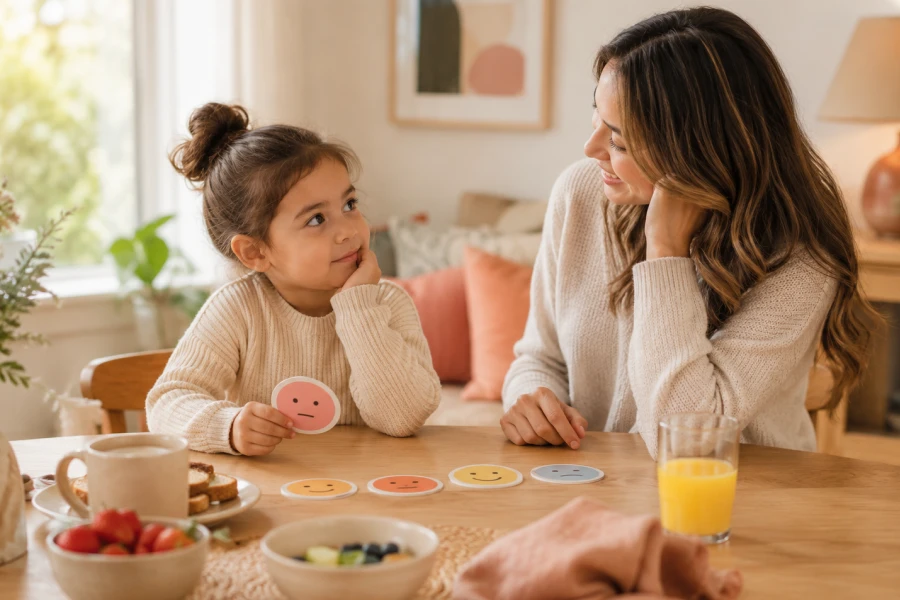
Emotional growth for kids often happens in ordinary family moments, not formal lessons. A rushed breakfast can teach patience. A spilled drink can teach repair. A hard morning can teach resilience. Children learn how emotions work by watching adults respond to them. They need language, structure, and calm repetition. They also need permission to feel without permission to hurt others. This balance helps children become steady and kind. Parents can make growth feel normal. With positive family routines, emotional learning becomes part of the day.
Children cannot manage feelings they cannot identify. Naming emotions gives them a map. Sad, jealous, nervous, proud, embarrassed, and disappointed all mean different things. Each feeling needs a slightly different response. When parents name feelings calmly, children feel less overwhelmed. They also feel less alone. This does not excuse poor behavior. It explains the signal behind it. Once children understand the signal, they can choose a better action. Emotional vocabulary turns chaos into something more workable.
Correction lands better when it does not feel like rejection. Children need limits, but they also need connection during hard moments. A calm voice helps the brain stay open. A harsh voice often triggers defense. Parents can describe the behavior, state the limit, and offer the next step. This keeps the lesson clear. It also protects the relationship. Children learn that mistakes can be repaired. Over time, modern parenting support helps families respond with steadiness instead of panic.
Confidence and kindness are often treated like separate goals. In reality, they support each other. A confident child can admit mistakes more easily. A kind child can connect with others more deeply. Both traits require emotional strength. Children need to know they matter. They also need to know other people matter. Parents can reinforce both ideas during daily interactions. Celebrate courage and compassion together. Notice bravery when a child apologizes. Notice kindness when a child includes someone. These small moments shape identity.
Big reactions can feel exhausting, but they reveal important needs. A meltdown may show hunger, fear, fatigue, frustration, or overstimulation. Parents can look beneath the behavior without ignoring the behavior. This approach keeps discipline useful. First, help the child return to calm. Then discuss what happened. Later, practice a better option. Timing matters because children learn poorly when overwhelmed. The goal is not instant maturity. The goal is gradual skill-building. AI parenting tools can help parents plan phrases and routines for repeated challenges.
Social situations give children emotional practice in real time. Sharing, waiting, losing, joining, and apologizing all require regulation. Parents can prepare children before these moments. They can role-play what to say. They can discuss what friendship feels like. They can review what happened afterward. This makes social learning less mysterious. Children begin to understand their choices. They see that relationships require patience and repair. These skills become especially valuable at school. They help children enter groups with more confidence.
Resilience grows through recovery, not perfection. Children become stronger when they experience manageable difficulty and then move forward. Parents can help by avoiding shame and over-rescue. Ask what helped last time. Remind them of past success. Break the next step into something small. This teaches children that hard moments pass. It also teaches them they can participate in the solution. Over time, emotional recovery becomes familiar. Children stop seeing setbacks as proof they cannot cope. They begin seeing them as moments they can handle.




Leave a comment